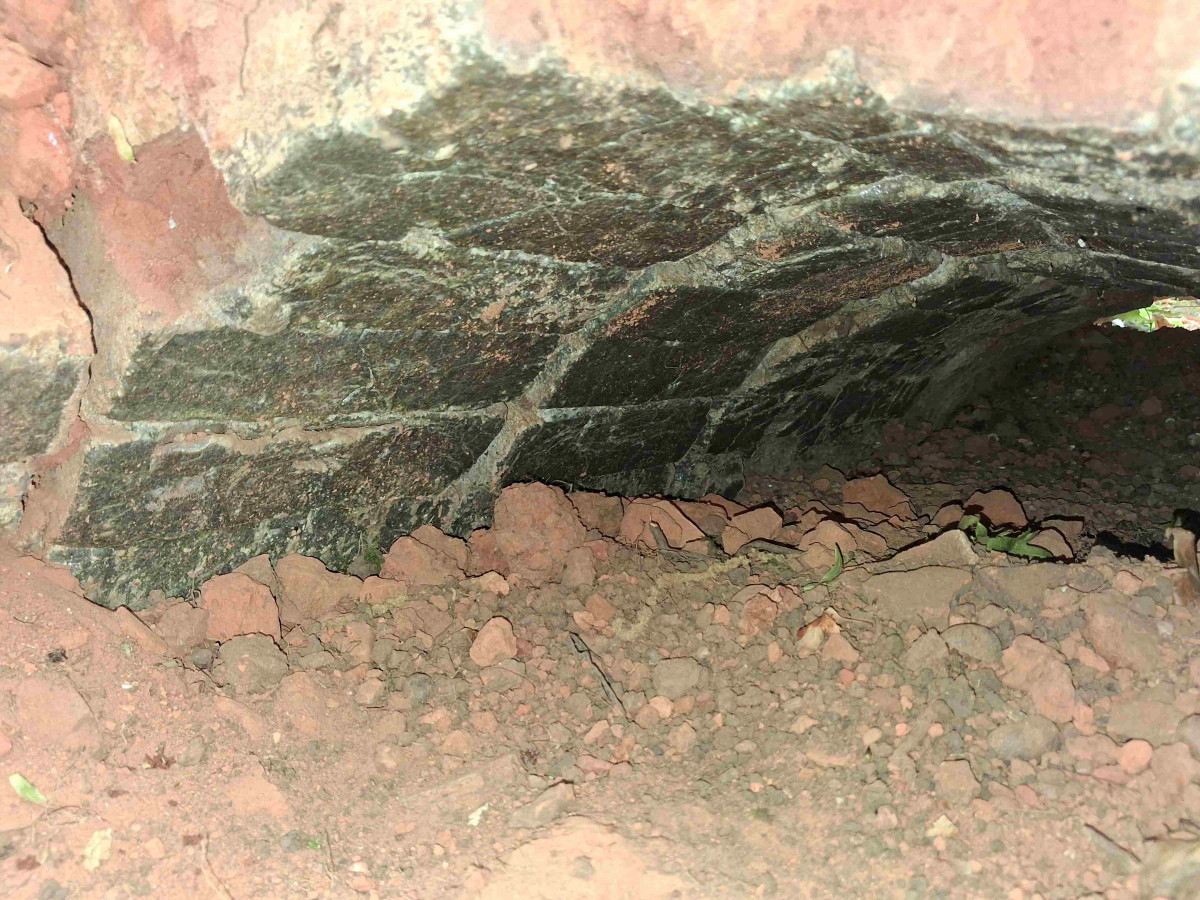
The photo’ shows the arch of one of the stoke holes. The heat has caused vitrification of the bricks.
We now have the floor of the kiln so while work will continue within the kiln attention will also focus on the outer area of the stoke holes. We are looking for the floor which should give us evidence of which fuel was used to fire the kiln.
Hands on History Symposium: Mudlarks of the Thames Foreshore
Two-day symposium bringing together practising mudlarks & academic researchers in a blend of presentations, short talks & panel discussions.
Mudlarks of the Thames Foreshore is a two-day symposium which brings together practising mudlarks and academic researchers in a blend of presentations, short talks and panel discussions. The symposium takes place at Guildhall Art Gallery, London, alongside the Hands on History mudlarking exhibition (part of Totally Thames 2026). The symposium is free to attend and open to all.
This photo shows a corner of the structure with a possible (sealed) ‘wicket’ gate allowing access inside the kiln. Running parallel to this wall towards the stoke hole left of centre, is the flue allowing hot air to circulate under the kiln floor. (Photo JT)
Earlier in the summer, pre-heatwave…
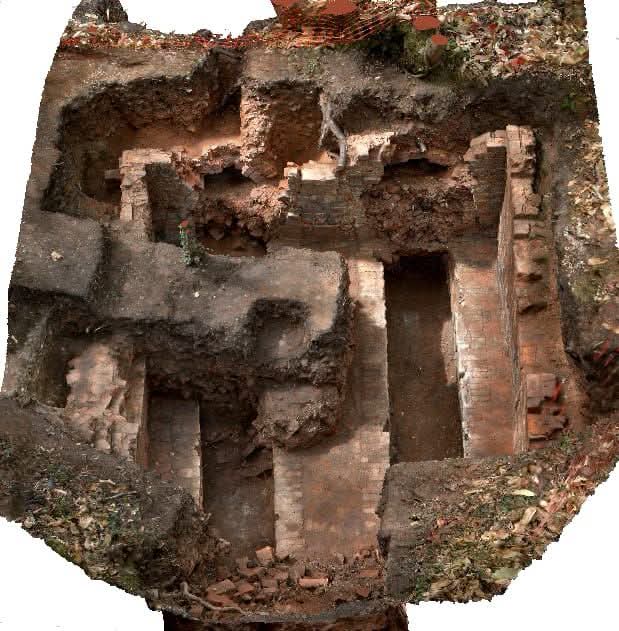
The excavation continues apace. The image below shows the internal extent of the kiln with the loading floor partially uncovered (bottom centre) and the two stoke holes (top). Further pipe bowl finds indicate the kiln might date from as far back the early eighteenth century.
Thanks to JT for his photographic wizardry in producing the picture.
As always everyone is welcome to join us but please drop us an email first to get details.
Today we got together at Shorne Woods and celebrated our 20th year.
Thank-you to the team for putting together the food, drinks and details about our work over the past two decades. At the cutting of the cake (a fabulous and tasty design by Sue Halls) a speech was given by Victor Smith of the Gravesham Heritage Forum. The Forum awarded SWAG for our contributions to community archaeology, and the citation regarding the award is repeated below.
Here’s to another 20 years of excavation, learning, sharing our knowledge and fun!
“SWAG – the Shorne Woods Archaeology Group – is an example of what a community archaeology organisation can do and achieve.
Based at the Shorne Woods Country Park, in a sense its spiritual home, SWAG’s origins go back to 2006, when activities were started by Lyn Palmer. These initially concentrated upon the Randall Woods area, especially re-locating and excavating Randall Manor, which I helped at much earlier, 60 years ago. The scope of activity soon expanded to embrace the investigation of the WW2 dispersed accommodation camp in the woods, including its air raid shelters, parts of a pre-D-Day accommodation camp, as well as of historical industrial activity relating to clay extraction, investigations which continue to this day.
The wider landscape of Cobham has been taken on too, with community excavations in the village area and work at the Lodge Lane anti-aircraft site.
Until work elsewhere took him away in 2021, Andrew Mayfield had been the organiser, although still very much involved. SWAG became an entity in 2023, with its own management and directing team.
The geographical scope of its presence has expanded from Shorne and Cobham to include work in Gravesend, Thanet, the Darent Valley, Romney Marsh and Fort Amherst. Not only this but SWAG has mounted a succession of public engagement events and exhibitions, fed the results of its work into the KCC Historic Environment Record, informed the world of its findings and achievements through a website and social media as well as through publications on Shorne and Cobham. This is all really very impressive.
The SWAG team exude skill, knowledge, enthusiasm and even laughter. If you want to learn about the possibilities from community archaeology, you have only to look at what they do.